
About
I was on £80 a day. Then someone showed me a video.
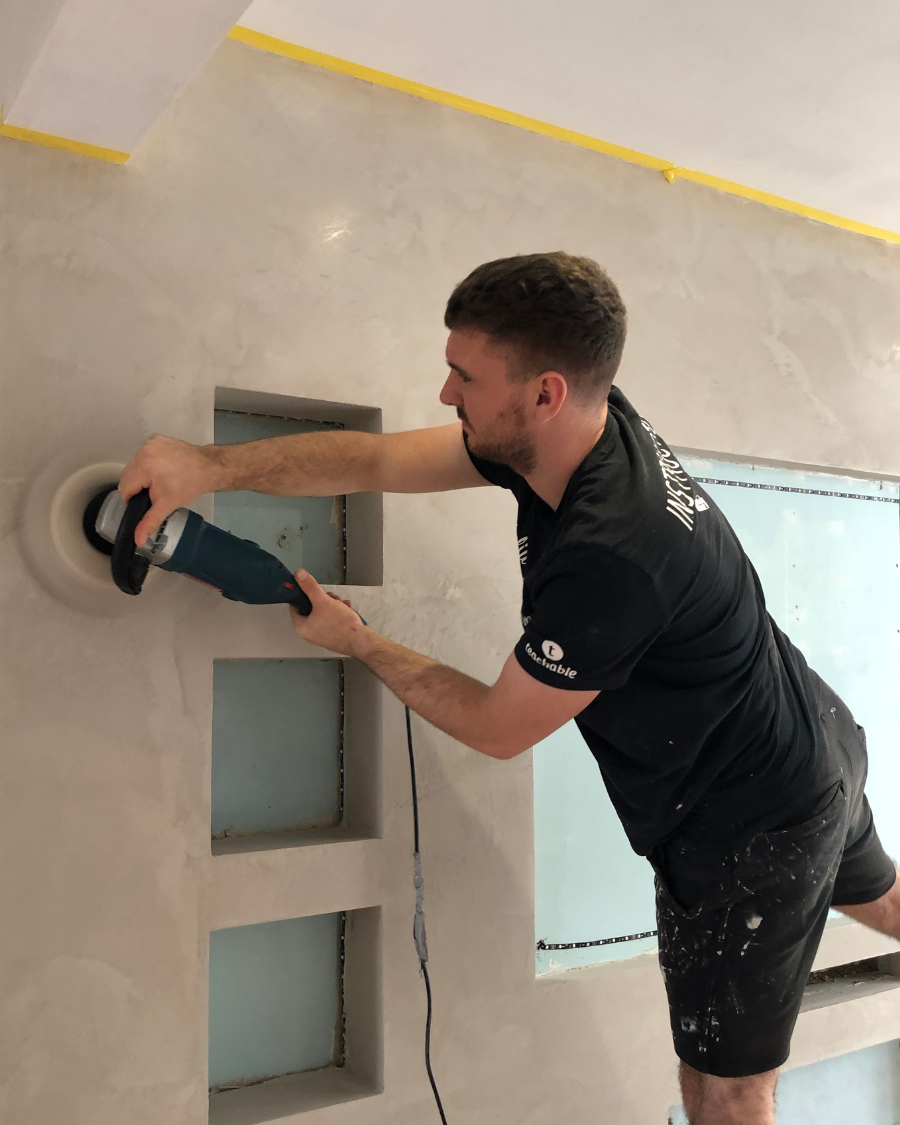
I'm Tom Power. I started as a labourer on my dad's sites, trained in drywall and plastering, and hated it. Ten years later I've spent over £10,000 learning decorative finishes and taught the trade to more than 6,500 people.
- 10 years
- In the trade
- Started at 18
- As a labourer
- £10,000+
- Spent learning it
- 6,500+
- Students worldwide
Before
Same wall, different house, every day.
I was labouring on my dad's construction jobs at eighteen. He didn't want me stuck as a labourer, so I went into drywall and plastering as an improver, shadowing him and the lads on site.
I enjoyed parts of it. But I had a bad shoulder that was only going one way, and the work itself was the same thing every day. Everything looked identical when you'd finished. Nobody appreciated it. And it wasn't well paid, £80 to £120 a day, which is what you get for skilled work that nobody notices.
I wasn't looking for a way out, exactly. I just knew that wasn't going to be the next forty years.
£80 to £120 a day for skilled work nobody notices.
The turn
A plasterer on site showed me his phone.
He'd found Venetian plaster on social media and was showing me these mad finishes people were producing. I remember thinking: that's what I want to be able to do.
It ticked everything. I'm hands-on and practical and I wanted to stay that way. I just wanted the work to be creative, bespoke, something where every job looks different from the last one and the client actually reacts to it.
And the money was a different world. I went from £80 to £120 a day to £500 to £1,000 a day. Same hands, same site sense, completely different rate, because you're one of very few people locally who can do it.
Learning it
Nobody would tell me anything.
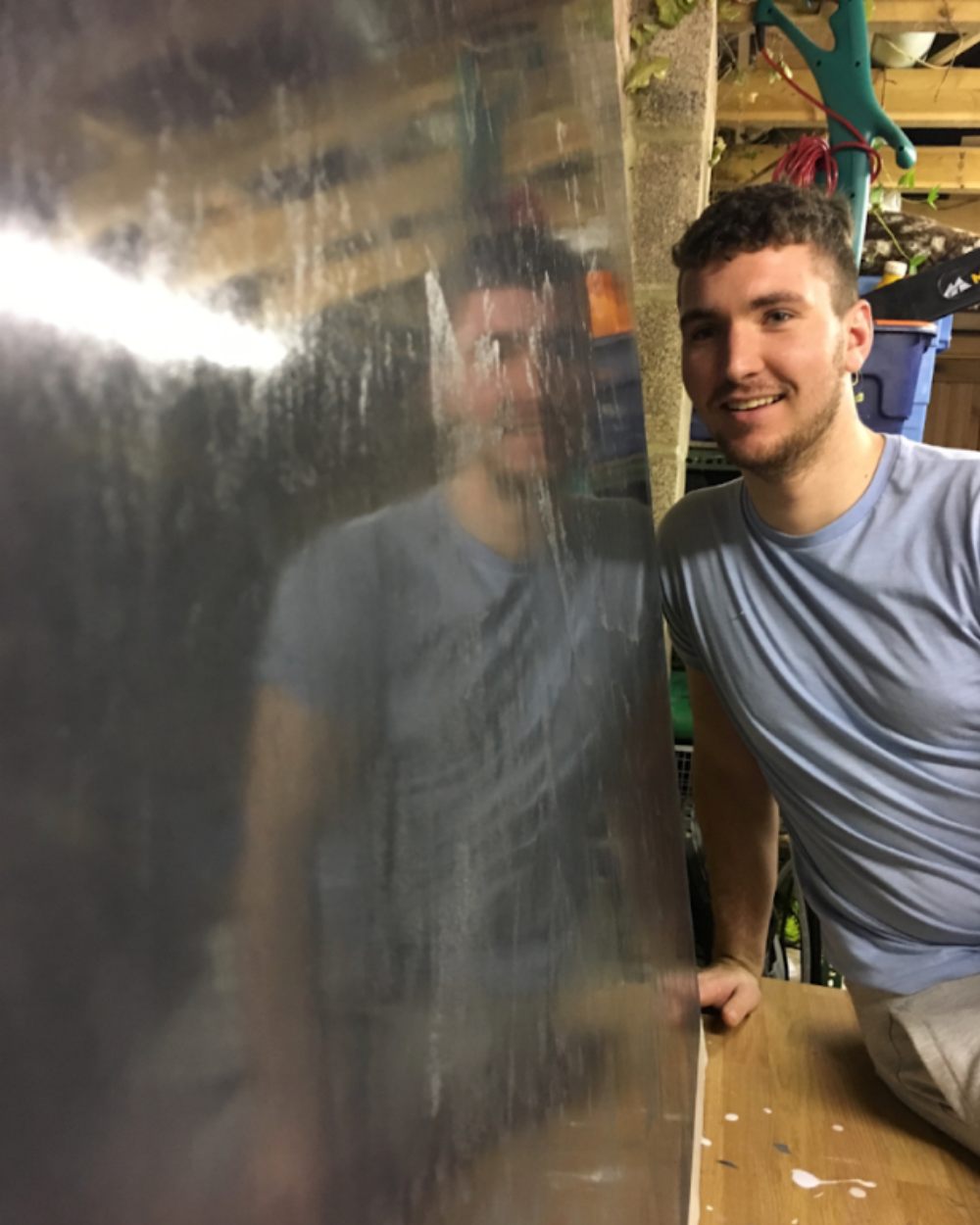
I started the way everyone does, self-taught, off the internet, in the garage. All sorts of different finishes and none of it quite working. And when I tried to get answers from people who already knew, I got nowhere.
This industry is secretive. People are protective and not very forthcoming. Everyone guards what they know, which is why so many people give up before they've got anywhere.
So I paid for it instead. I went on courses. I shadowed applicators. I went to Italy. I went to Serbia. Over ten years I've spent well over £10,000 on courses, travel and shadowing people, just getting to the point where I actually knew what I was doing.
People are protective and not very forthcoming. That's why most people give up.
Why we do it this way
The gap wasn't skill. It was having someone to ask.
When I finished training I could produce the finishes. What I didn't have was the confidence to jump in and take the job, and there was nobody to ask. That's the gap that stops people, and I noticed even the courses I paid for didn't fill it.
So support is built into everything we do rather than sold as an extra. Even the $27 introductory class comes with access to the private community, because taking the leap into real jobs is the part nobody helps you with.
Everything else follows from that. One-to-one mentoring on the Masterclass. Support during your first installs. A community where people share what's actually working instead of guarding it.
What I got wrong
The primer job I still think about.
I used the wrong primer on a wall and finished the whole install on top of it. Then came the weeks of waiting to see whether it was going to fail, and the job of putting it right when it did. That taught me more than any course: about substrates, and about how you talk to a client when something's gone wrong.
Learning to have that conversation, negotiating, managing expectations, being straight about what's happened, turned out to be as much a part of the trade as the trowel work.
I also undercharged badly at the start. I don't think that was a mistake. I used those jobs to build a portfolio, and that content brought in the next clients and the recommendations after them. If you're starting out, I'd actively tell you to do the same.
What I see students get wrong
- Thinking they already know. Especially people from a construction background, they assume it'll behave like plaster or filler, and it doesn't.
- Trowel control. It reacts completely differently to anything you've worked with before. The habits you've built over years actively work against you.
- Creating movement. Getting depth and movement into a finish is the thing that separates a wall people stop and look at from a wall that just looks painted.
The work
Mostly homes. Occasionally art.
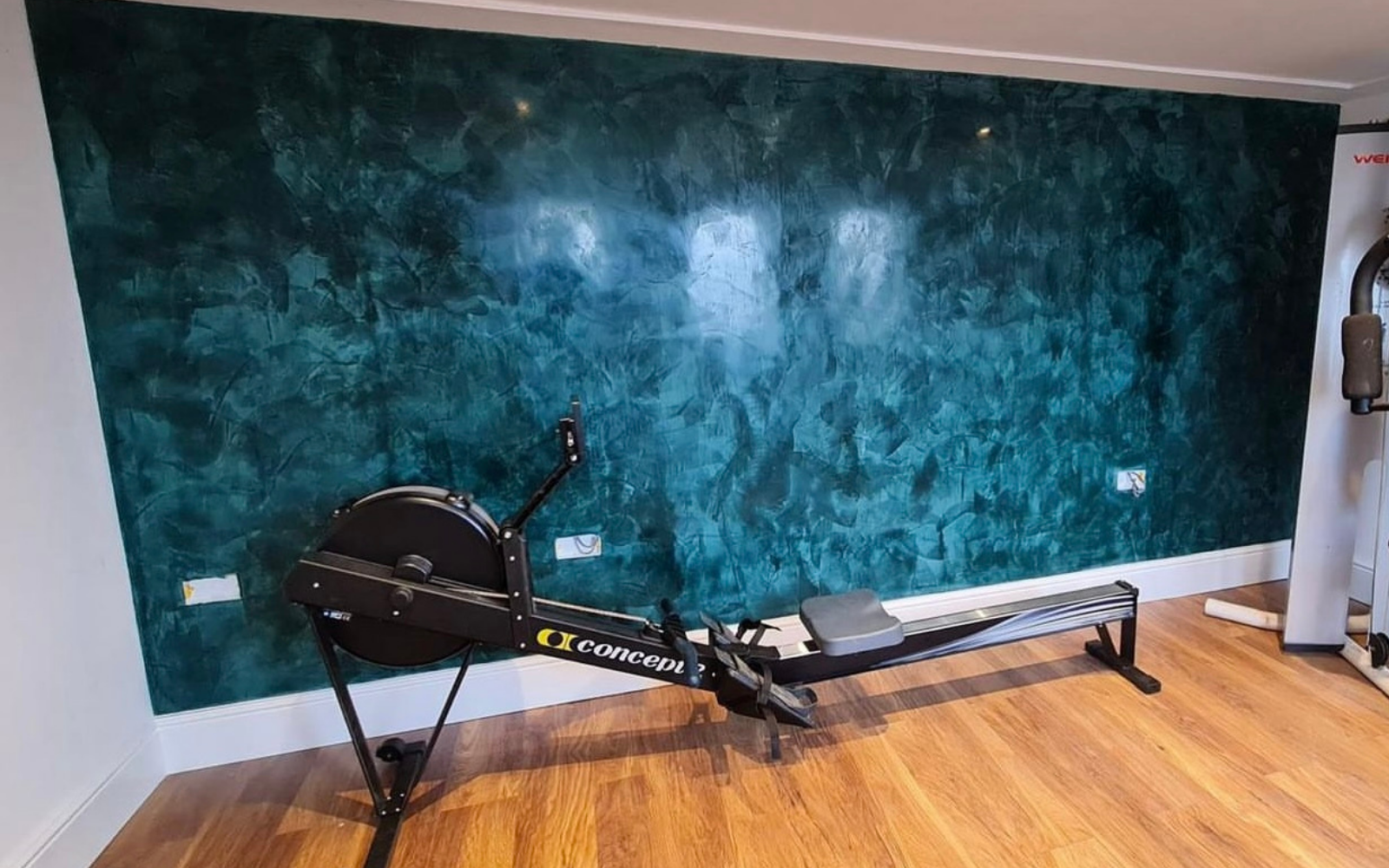
Most of what I've done is residential, media walls, bathrooms, pillars, ceilings, accent walls, kitchen splashbacks. Less commercial than people assume.
I've also made commissioned art pieces with the same materials, which is something a lot of people don't realise you can do. You can make them at home and sell them online, and there's a real market for it.
No famous names. Successful entrepreneurs and business owners, and plenty of ordinary homeowners who saw a finish online and wanted something in their house that nobody else has. The biggest single job was £20,000, several large feature walls in one residential property.
The hardest work is anything marbling, and anything in an awkward space. Those are the jobs that teach you the most.
Why I teach
It started as videos I sent people on Instagram.
People kept asking how to do it, and a lot of them couldn't get to a studio, the travel and the cost of in-person courses put it out of reach. So I brought the training to them instead, and built it properly, so it works for different ways of learning rather than assuming everyone picks things up the same way.
It was well received straight away, so we kept putting time and money into it. That's how it went from clips sent over Instagram to what it is now.
There are over 6,500 students now, mainly UK and US, plus Europe, Canada and Australia. I still install, but less than I did. Most of my focus is on the education side and on building something that keeps supporting students long after they've finished a course, and that helps grow the industry so there's more work in it for all of us.
The one that sticks with me
He had £500 to his name and spent £400 of it with us.
That was genuinely everything he had. He took the course, learned the skill, and started charging thousands for his work. He's completely changed his life with it.
I think about that one a lot, because it's a reminder of what people are risking when they enrol. Someone spending their last few hundred pounds deserves more than a video library and good luck.
Who I work with
Zeljko, and eight years with Stucco Italiano.
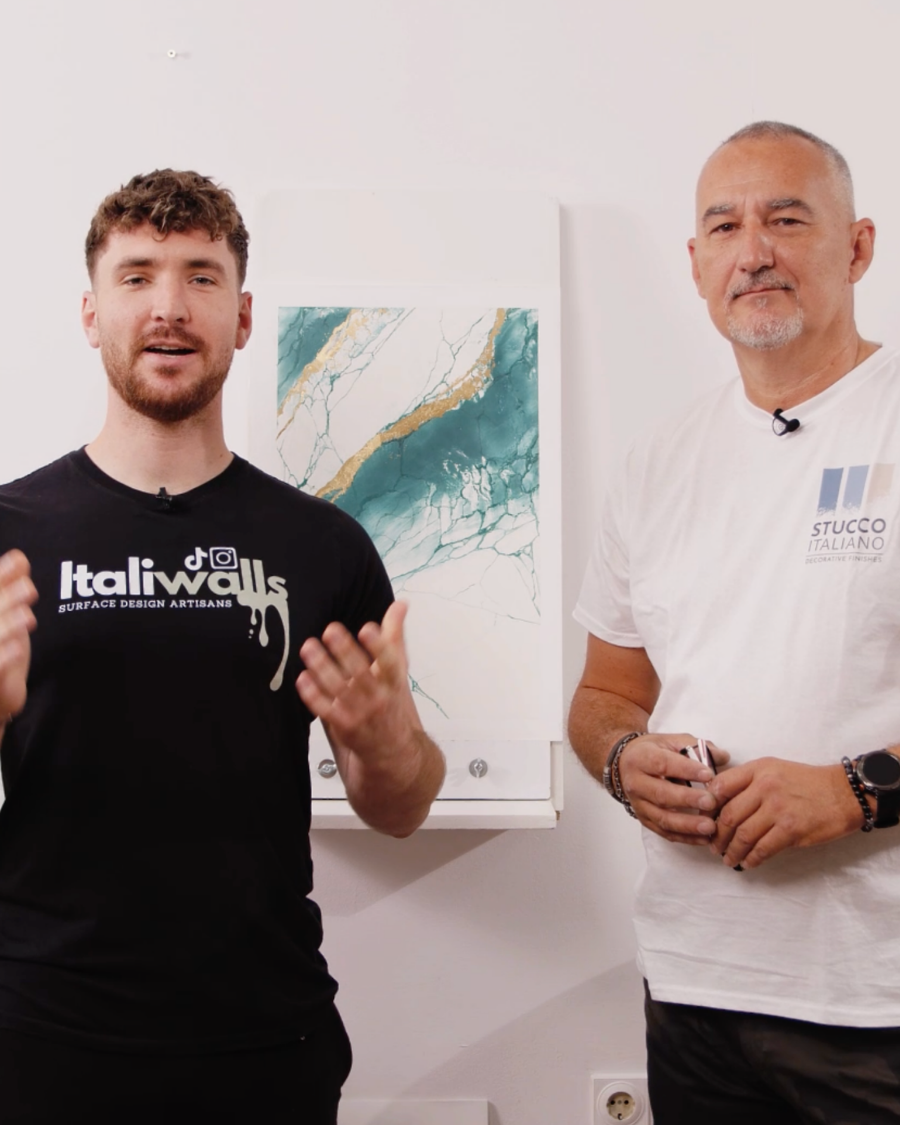
I met Zeljko through Stucco Italiano. He's a Serbian master craftsman and an incredible marble artist, genuinely better at that than I am, which is exactly why I wanted our students to have access to him.
He saw how much support we were giving people and wanted to be part of it, so we started running in-person training together in Belgrade. It means students get more than one perspective, from people who've done this in different markets.
We've been working with Stucco Italiano and Cait Whitson for eight years. They supply everything we use and more, the products are excellent, and our clients love the finishes they produce.
If you're on the fence
It's never too late to change what you do all day.
Most people who work with their hands love being creative, and love the moment a customer actually reacts to something they've made. This is a skill that lets you do both, and the market for it is bigger now than it's ever been, and still growing.